Tag: kitchen

  • Carter Table

    Carter Table

    carter5
    Tim Cuppett Architects approached me with creating this table for a hill-country retreat they were creating for their client. The design process came about as a collaboration with them.

    They needed a kitchen table for everyday use that’s separate from the big dining room table. This would be the table they would use the most often for daily use- casual eating, conversations, homework, coffee drinking, etc. In other words, it had to be made to withstand the daily toil, but still be elegant. Space was limited, so the round table was a natural choice.

    [singlepic id=301 w= h= float=center]

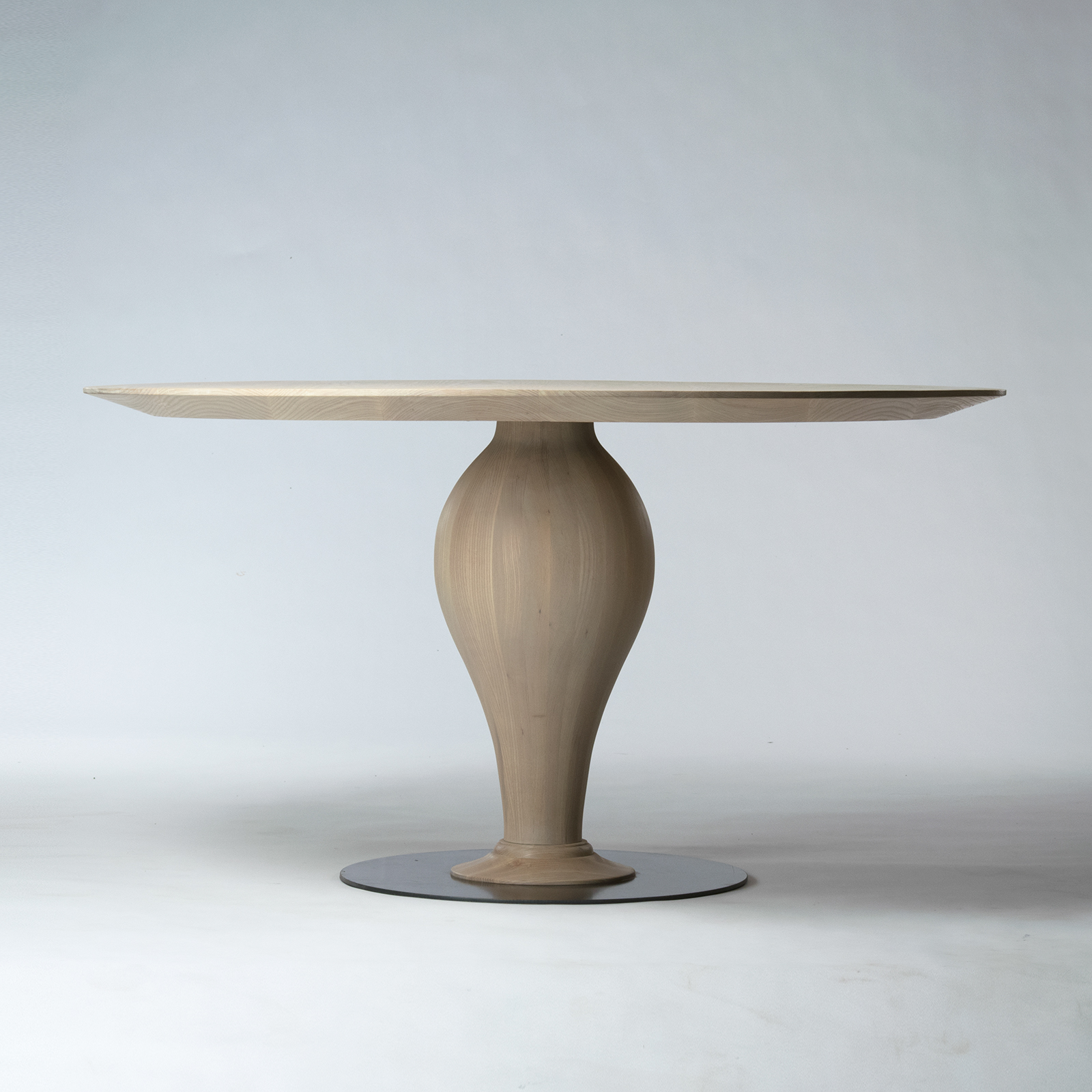
    The design was driven from the chair backs of the client’s family heirloom dining chairs. The chair had a queen anne style back, so we took that form and transformed it into the pedestal base. Because we didn’t want to see wood lamination joint lines as we cut the extreme curves, we glued up the base in a coopering technique. The ash wood was selected to get the straightest grain possible to keep the lines flowing smoothly.

    [singlepic id=299 w= h= float=center]

    The top is actually a thick top, but we cut a large bevel around the perimeter to create a knife edge to keep the top visually light. It also allows for more view of the pedestal base. There is a metal framework inlayed into the underside of the top to keep everything flat and allows for a strong connection to the base.

    [singlepic id=300 w= h= float=center]

    For a narrow pedestal base like this, the footing is always an issue. Most traditional pedestal bases have a large wooden structure (usually in a claw foot detail) that would have destroyed the whole look, so we went for a much cleaner and more modern look by adding a steel plate as the feet. Creating a thin profile for the bottom really highlights the shape of the pedestal without sacrificing structural integrity or making a tipsy table.

    [singlepic id=302 w= h= float=center]

    The table was finished in white oil that kept the wood looking as natural as possible.
  • Ship Lap Island

    Ship Lap Island

    reclaimed-island5

    A real estate developer approached me with a challenge. He had an old 1930’s dilapidated home that was scheduled for demolishing, but he knew there was some nice old lumber used in the house so asked me to come up with some modern designs using the wood from this home. My first thought was “this is going to be a lot of work”, but when I saw the wood and started toying around with the idea, I couldn’t get it out of my head.

    [singlepic id=218 w= h= float=center]

    I knew many houses built back then used just nailed pine boards on the house framing as the wall and then plastered over it. As soon as I got permission, I started tearing the plaster off and what I found were beautiful, wide, ship lap pine with very little defects. I took off as much as I could grab in a day, and took it back to the shop to start pulling all the nails out.

    [singlepic id=219 w= h= float=center]
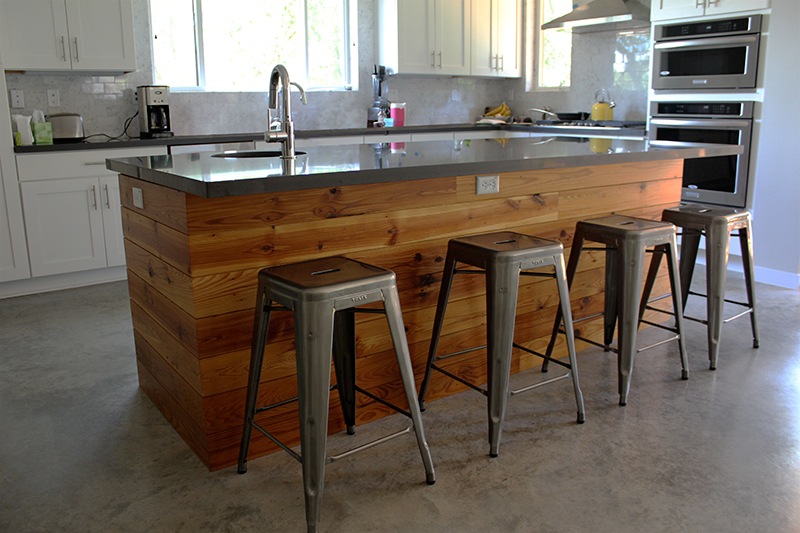
    We decided to use the recovered pine as the kitchen island. Using the pine for the kitchen island is a great use for it since the old growth pine would withstand all the beating of every day living over the years- especially with three kids running around. Usually, reclaimed pine is left with the patina and grime to keep that ‘reclaimed’ look, but I wanted something cleaner. The pine itself is old-growth pine so the tone is beautiful even when new wood is exposed. Rather than making the boards sit tight against each other like it was originally, we went for a little bit of a gap in between so we could accentuate the ship lap aspect part of the original wall and tie the history of the boards into the design. The difference in each board is a big part of the beauty of these boards, so we laid the boards out in a random pattern to bring out the individuality in each boards.

    [singlepic id=217 w= h= float=center]

    The kitchen island wraps from the back all the way to the side and then back around to the front. In the front, the pine wraps into the kitchen cabinets, tieing the whole kitchen together. In a modern room, this little island adds character, history, and warmth to this family in this new home.

    [singlepic id=220 w= h= float=center]