Tag: steel

  • Hafu Tables

    Hafu Tables

    The Hafu tables came from a single question. How thin can you make a wood table without it breaking? The answer was…pretty thin if you include metal in there. The exterior of the table is all wood, and the inside of the table is all metal. The glass top allows visibility to the construction of the different materials. The name Hafu came about from the Japanese fascination with mixed race. There are strengths and weaknesses of all materials, and with this design, it’s combined to utilize the strengths of all.

    [supsystic-slider id=6]

    Features – splined connection for the wood, welded metal for strength.
    Options – Metal could be left as blackened steel, Top could be stone, metal or even wood.


    Dimensions: 24″ wide x 24″ deep x 30″ high.
    Finish: Oil, Paint
    Materials: White Oak, Douglas Fir, Steel


    Please Inquire for Pricing, Lead Times, and Customization.

  • Carter Table

    Carter Table

    carter5
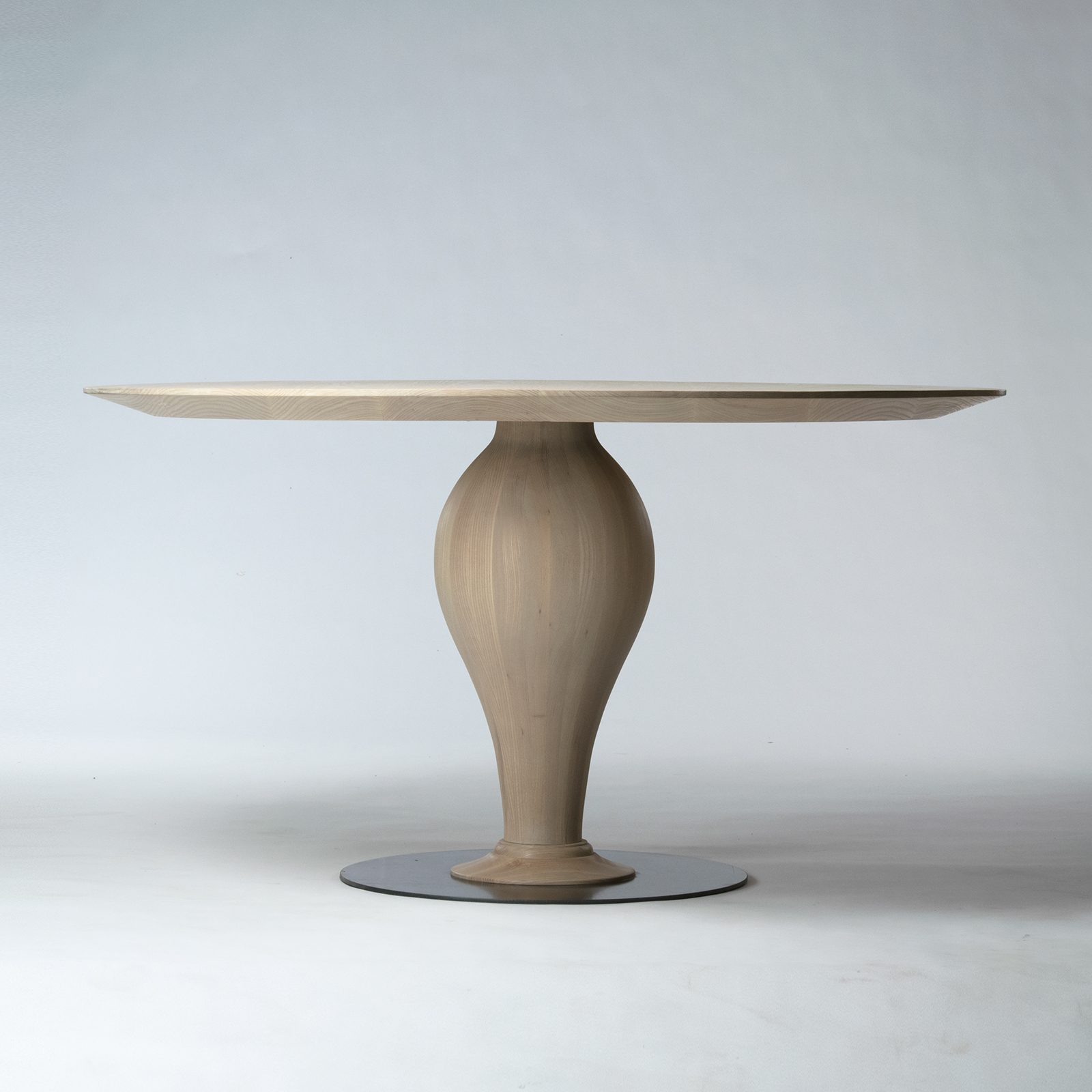
    Tim Cuppett Architects approached me with creating this table for a hill-country retreat they were creating for their client. The design process came about as a collaboration with them.

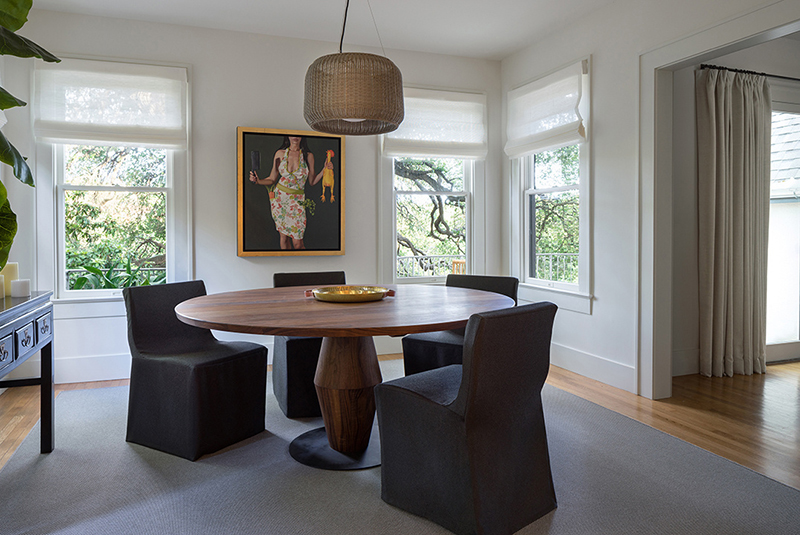
    They needed a kitchen table for everyday use that’s separate from the big dining room table. This would be the table they would use the most often for daily use- casual eating, conversations, homework, coffee drinking, etc. In other words, it had to be made to withstand the daily toil, but still be elegant. Space was limited, so the round table was a natural choice.

    [singlepic id=301 w= h= float=center]

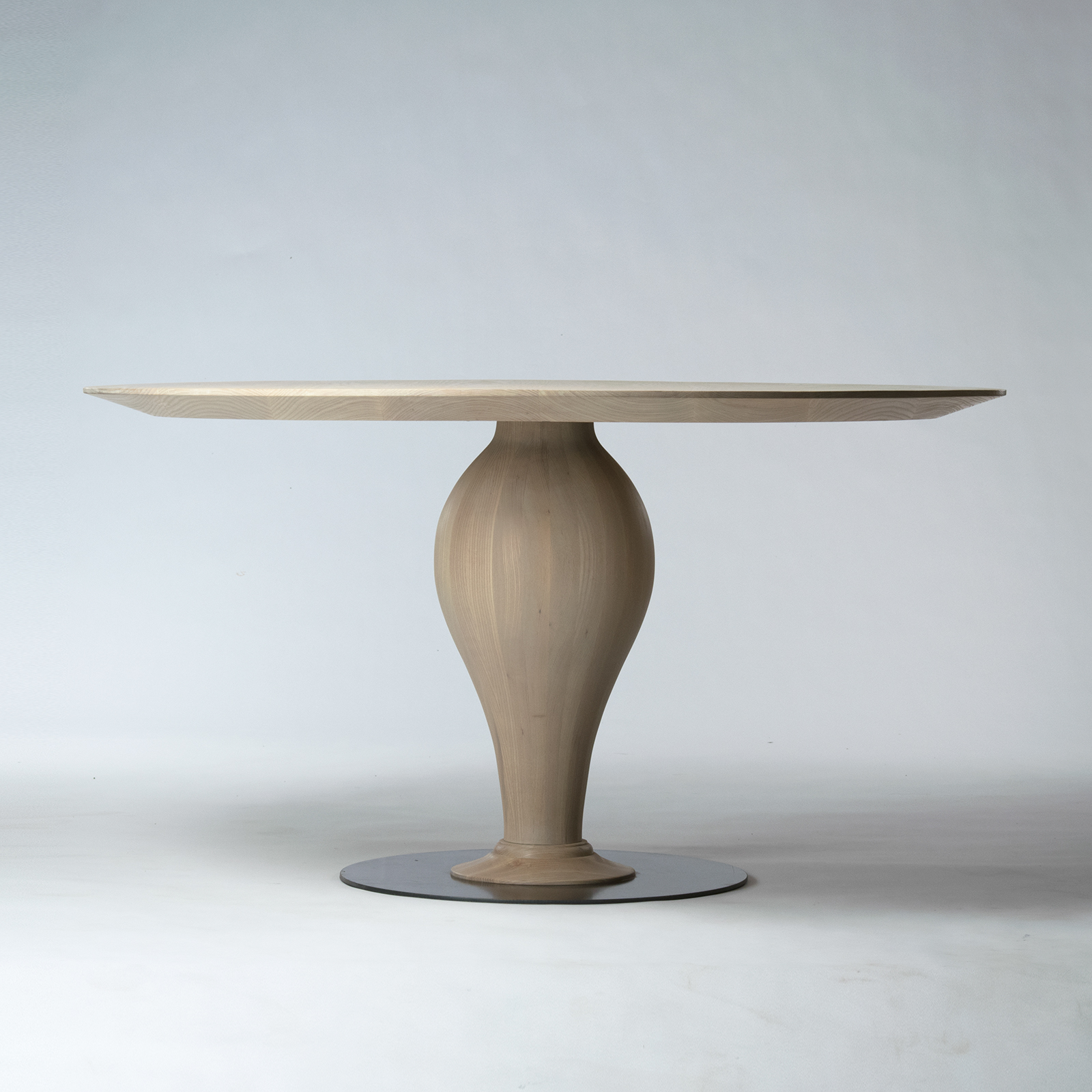
    The design was driven from the chair backs of the client’s family heirloom dining chairs. The chair had a queen anne style back, so we took that form and transformed it into the pedestal base. Because we didn’t want to see wood lamination joint lines as we cut the extreme curves, we glued up the base in a coopering technique. The ash wood was selected to get the straightest grain possible to keep the lines flowing smoothly.

    [singlepic id=299 w= h= float=center]

    The top is actually a thick top, but we cut a large bevel around the perimeter to create a knife edge to keep the top visually light. It also allows for more view of the pedestal base. There is a metal framework inlayed into the underside of the top to keep everything flat and allows for a strong connection to the base.

    [singlepic id=300 w= h= float=center]

    For a narrow pedestal base like this, the footing is always an issue. Most traditional pedestal bases have a large wooden structure (usually in a claw foot detail) that would have destroyed the whole look, so we went for a much cleaner and more modern look by adding a steel plate as the feet. Creating a thin profile for the bottom really highlights the shape of the pedestal without sacrificing structural integrity or making a tipsy table.

    [singlepic id=302 w= h= float=center]

    The table was finished in white oil that kept the wood looking as natural as possible.

  • Constantin Table

    Constantin Table

    Targu Jiu Table

    This project was a collaboration piece with Tim Cuppett Architects here in Austin, Texas. They approached me looking to create an elegant round pedestal table for their client’s home they had been building. They wanted something modern and simple, but with enough details to make it a special central piece for their dining area.

    [singlepic id=279 w= h= float=center]

    We bounced ideas off of each other, and we finally came to this design inspired by Brancusi’s Endless Column in Targu Jiu. There are two tapered cones made with a coopering technique (like the oak barrels for wines and bourbons) that are mirrored and stack on top of each other. Those cones are then sandwiched by two round plate steels that have a long threaded rod connecting the two.

    The table is made out of American Walnut.

    The photography was taken by Whit Preston.

  • Logan Desk

    Logan Desk

    andrewdesk

    My client came to me to create a new desk for his home office. He is a producer at a video production company so he’s constantly on the move and having to work in different locations. He wanted something clutter free at his home office but easy for him to hook up his laptop and keep all the cables and plugs hidden. We went for a stripped down look, focusing on letting the functionality express the form.

    [singlepic id=242 w= h= float=center]
    The first question was what to do with the power cord and all the other cables. Instead of reaching down under the desk to find an outlet every time, we brought the electrical power source up to the desk so it’s always in easy access. The electrical plugin needs to be hidden but also easy to access- so the flip top cubby holes towards the back of the desk made the most sense. There is a notch that acts as a handle as well as a place for the cord to come out.

    [singlepic id=245 w= h= float=center]

    There’s also three drawers that slide out in the front for all the paperwork and sized so that a laptop could be stored inside. The middle drawer has a pencil tray for quick access to jot down notes. As for the rest of the form, we wanted the cubby holes to be deep enough to store all sorts of things so we made the back section deep. The drawers in the front couldn’t hang too low to allow enough space for the legs, so we tapered the side from deep cubby up to narrow drawers. For the legs, we opted for the most stripped down form we could do use without compromising strength. The legs are steel rectangles bolt on from the inside of the desk.

    [singlepic id=243 w= h= float=center]

    The desk is finished with hand rubbed oil so it ages nicely and any scuffs or dings will only give it more character instead of calling attention to itself. The steel legs are left raw and waxed to keep that beautiful raw steel look.

    [singlepic id=241 w= h= float=center]

  • A Colorist’s Desk

    A Colorist’s Desk

    malina-desk9

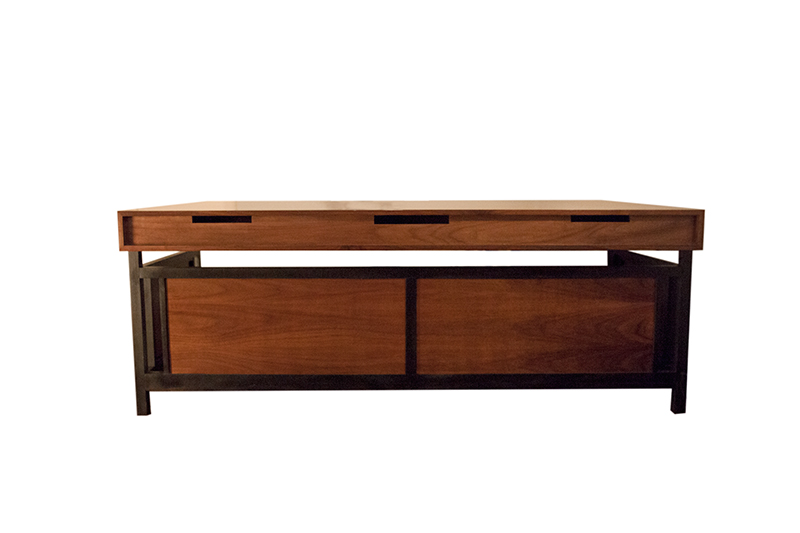
    A colorist for film approached me to create a desk for him. A colorist is the person who adjust the color in a film frame by frame to make sure that everything is consistent and there are no sudden changes. Because of the way that light affects how your eye sees colors, he works in a pitch black room with a single light source that has the correct light frequencies. He also has clients come to his studio so he can show them what he’s working on so the desk also had to look presentable to clients from every direction. Another design requirement was that the desk had to support all of his big monitors and his editing gear.

    [singlepic id=203 w= h= float=center]

    We came up with using walnut because it’s a dark tone wood and the tone blends into the darkness when all the lights are off. The top also had to be large enough to hold all his editing equipment without it taking up the entire room. Since there are clients in there frequently while he’s editing, we included a modesty panel to keep the area looking clean. The attention needs to be on the big screen, not the mess under the desk. To make the desk not feel like a huge heavy mass, I included cutouts in the modesty panel where it meets the frame.

    [singlepic id=200 w= h= float=center]

    The desk form is simple, and we wanted it to look nice, but not be the source of attention. To add a touch of sophistication and craftsmanship, the details are what shine through from the inlaid metal drawer pull to the stainless steel steel holding the desk top to the frame. The cutouts for wire management also adds appeal to the whole desk where everything is thought out ahead of time, rather just some hole with an off the shelf grommet.

    [singlepic id=201 w= h= float=center]

    Editing a film takes a lot of computer power and storage power, so we needed a place to store all his other equipment as well. We went with an open from cabinet for maximum air circulation that showcased his equipment rather than hiding it. The side cabinet mimics the desk design so it looks like a set.

    [singlepic id=202 w= h= float=center]

  • FWC-18′ conference table

    FWC-18′ conference table

    fwc18-9

    The good people of Far West Capital are so awesome that their business and staff just keeps getting bigger and bigger. I had made a 12′ conference table for them a few years ago, and they’ve already outgrown that one, so they commissioned me to make a 18′ conference table this time. They loved the traditional meets modern aesthetic of the last one, so we decided to design something that looks totally different from the last one, yet feels similar.

    [singlepic id=162 w=320 h=240 float=center]

    This was by far the biggest project I’ve had the opportunity to work on and logistics became the first and foremost in the design aspect. How can I make these parts in my shop and how can I break the pieces up so I can move it safely and easily? I decided that the top will be made from 3 parts and I wanted to make the top as light as possible since that has the biggest area. To support the top, there are thick and wide aprons that come apart and fit together with notches made in the wood. This gives stability to an otherwise flexible top. The aprons rest on pedestals that are angles and tapered in almost every direction. The taper came from trying to gain as much foot space as possible without sacrificing stability. One side of the pedestal is held in with clips so you can remove it to store and hide conference table equipment. At the feet there is a 1/4″ blackened plate steel that adds weight and distributes the footprint out so the top wont tip over.

    [singlepic id=145 w=320 h=240 float=center]

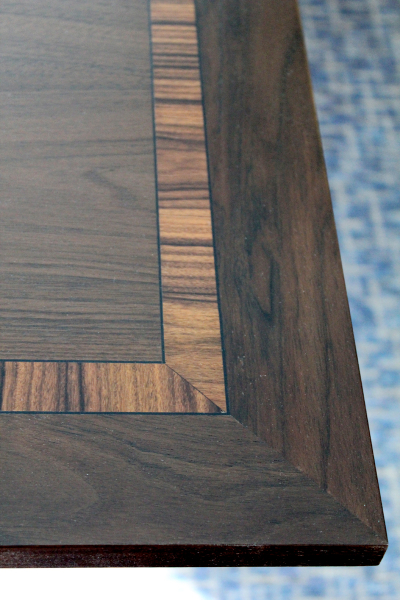
    The whole table is made from peruvian walnut veneered panels with solid wood edging. The removable center piece is made of spalted beech. Spalted is a figure in wood caused by fungal attack. The wood is left for fungus to attack, but then harvested before the wood rots completely and becomes unusable. It’s characteristics are black vein like lines with wood tones around it being different. I think the spalted beech was a nice compliment to the peruvian walnut and adds a little bit of country to the otherwise sophisticated elements.

    [singlepic id=147 w=320 h=240 float=center]

    To break up the large dark surface and to give a nod to traditional furniture we chose to inlay cross banding around the border. Cross banding is inlayed wood that is aligned so the grain is oriented side to side across the length. The outer cross banding is made from Bolivian rosewood and the inner cross banding that borders the spalted beech is Macassar Ebony. I feel the different tones in the woods give a nice transition to the different woods.

    [singlepic id=144 w=320 h=240 float=center]

    Sixteen people can sit all around the table easily and maybe a few more if people are willing to get close and cozy with each other. I think this design is a success because the real design elements are in the small details.