Tag: Walnut

  • Herman Nightstands

    Herman Nightstands

    [singlepic id=287 w= h= float=center]

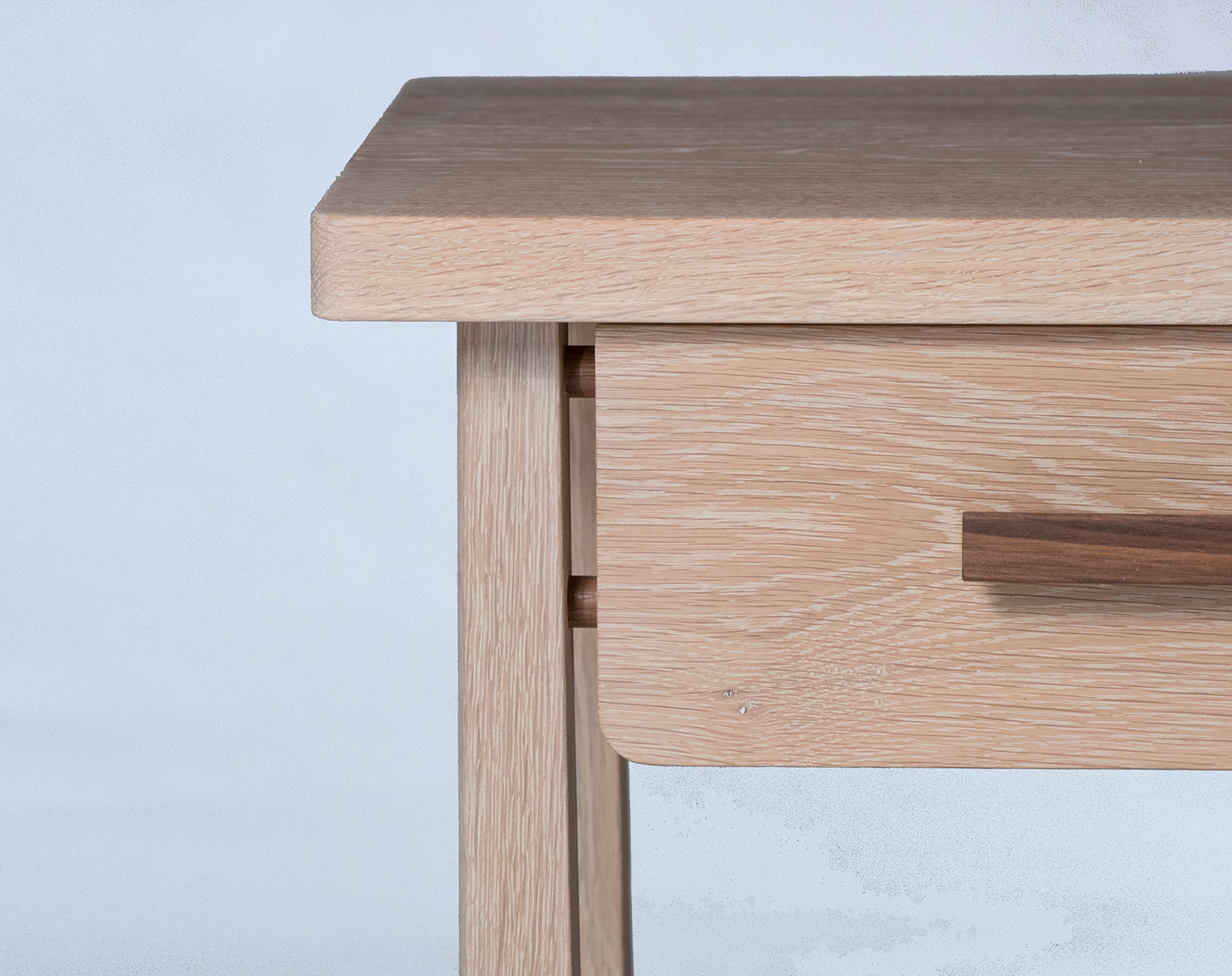
    The Herman nightstand was created to feature a shelf made that is made from Danish cord weaving. The Danish cord weaving is usually applied in seating format, but in this case, we used it for the shelf to add texture and tactile element to the piece. From there, we added flowing lines to the legs and added a drawer for your bedside contents. We added walnut spacers where the drawers meet the legs to add some definition and separation.


    [supsystic-slider id=5]

    Features – Danish cord shelf, Soft close drawer
    Options – The top could have a gentle curve on the ends or be square with slightly rounded corners.


    Dimensions: 36″ wide x 15″ deep x 30″ high.
    Finish: Ebonized Oak, Oil
    Materials: White Oak, Walnut, Danish Cord


    Please Inquire for Pricing, Lead Times, and Customization.

  • Constantin Table

    Constantin Table

    Targu Jiu Table

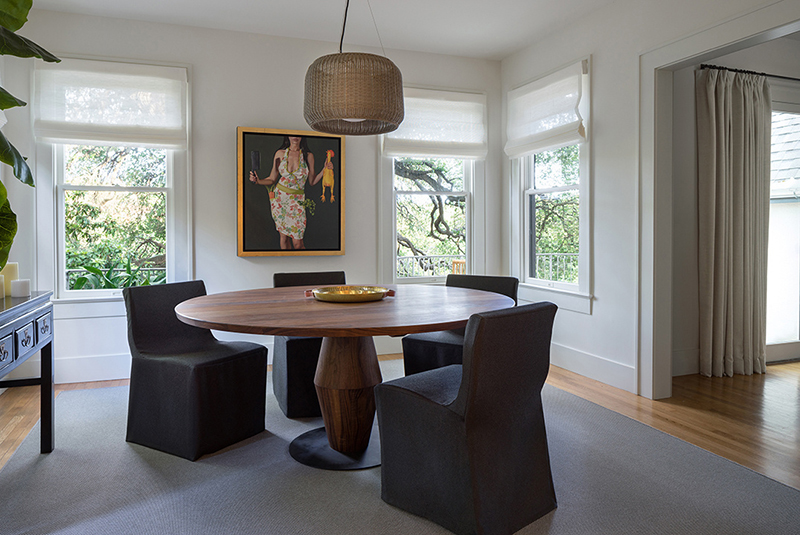
    This project was a collaboration piece with Tim Cuppett Architects here in Austin, Texas. They approached me looking to create an elegant round pedestal table for their client’s home they had been building. They wanted something modern and simple, but with enough details to make it a special central piece for their dining area.

    [singlepic id=279 w= h= float=center]

    We bounced ideas off of each other, and we finally came to this design inspired by Brancusi’s Endless Column in Targu Jiu. There are two tapered cones made with a coopering technique (like the oak barrels for wines and bourbons) that are mirrored and stack on top of each other. Those cones are then sandwiched by two round plate steels that have a long threaded rod connecting the two.

    The table is made out of American Walnut.

    The photography was taken by Whit Preston.

  • HEX game table

    HEX game table

    hex6

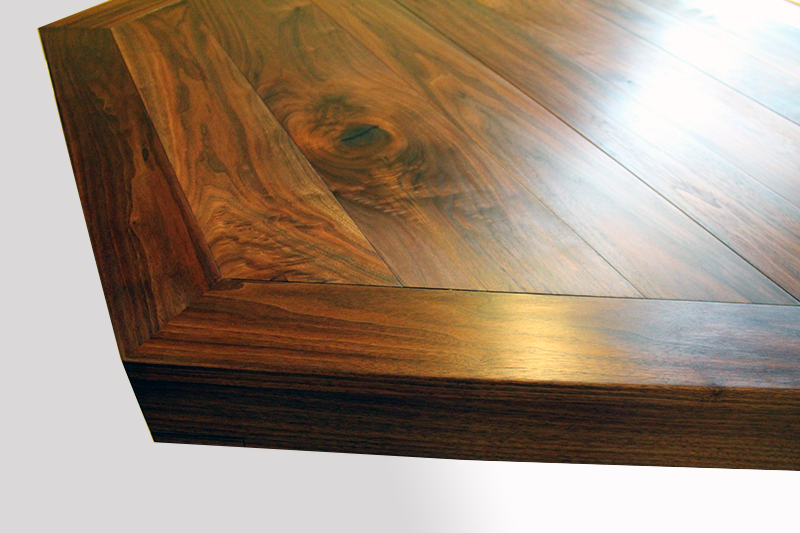
    My Client approached me wanting to create a game table for his family using his family Walnut that had been passed down the generation from his grandfather to his father and then down to him. My client would move the lumber everywhere he went until he could find out what exactly to build with it. 

    [singlepic id=251 w= h= float=center]

    Being an avid gamer, he and his family enjoys getting together to play role playing games where the games could go on for hours and possibly days. He wanted to be able to pause the game with all the pieces intact and in the meantime be able to keep everything from getting moved accidentally until the game would continue. After some research, we came to the split level design where the playing area is sunken in and there is a solid wood table top insert that can go on top to cover up the playing area. We also decided on having the game table hexagon shaped to better fit the room and so everyone is close together. 

    [singlepic id=252 w= h= float=center]

    The playing area is covered with gaming felt so it accommodates several types of games. There is also a plexi-glass insert so game maps can be inserted underneath without damaging it.

    [singlepic id=250 w= h= float=center]

    Since the table is six sided, we decided on a three-legged pedestal table base with a padauk inlay going down the center of each of the legs.

    [singlepic id=249 w= h= float=center]

    The client’s walnut had been air-dried so the walnut hadn’t lost it’s vibrant color as commercial steam dried walnut tends to do. Knowing that the lumber itself has a story makes it that much more of a pleasure to work with. I know this piece of furniture will be handed down the generations just like the lumber was.

    [singlepic id=248 w= h= float=center]

  • Bi-Fold Credenza

    Bi-Fold Credenza

    malinacred5

    This credenza came about from one of my past clients wanting a cabinet for storing and serving snacks when he has clients over. He wanted something simple that works with the rest of the furniture and decor in the room, but a design that can stand by itself also.

    [singlepic id=225 w= h= float=center]

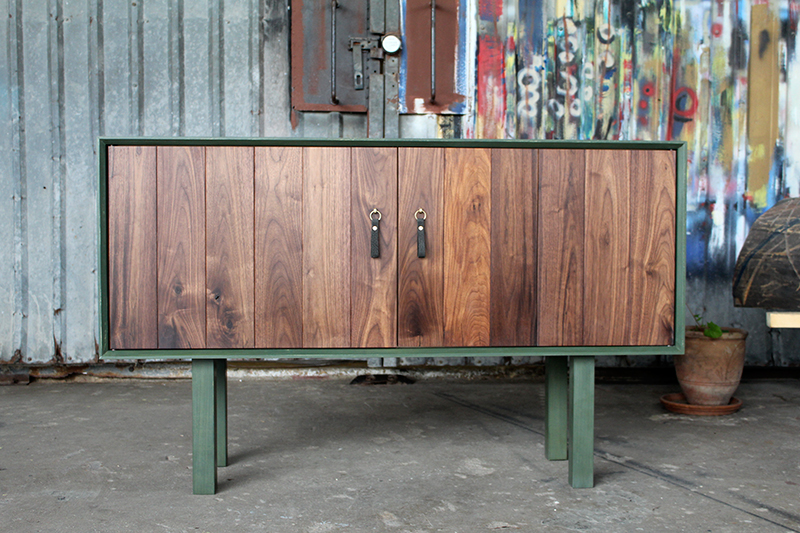
    I wanted to focus on how the cabinet is used and engaged- first and foremost. I love an element of suprise when you open a door or drawer so I wanted a dark exterior and a light interior. The lightness also helps to show the contents of the cabinet in a better light. I started thinking about how the light interior is revealed to the user and wanted something theatrical. We went for a bi-fold door that reveals the contents a little at a time- like the curtains before a play is about to start. Each board of the walnut has a bevel on the edge so it creates a texture in regular intervals and makes the door read like many different boards rather than just two doors.

    [singlepic id=229 w= h= float=center]

    Most of the furniture in that room is walnut, so we chose solid walnut for the doors, but we didn’t want the walnut element to be too over powering so we decided on a painted exterior. We went for a forest green milk paint. we chose milk paint because it’s durable and wont chip off, but mostly because I’m interested in the idea of imperfections. It’s nearly impossible to get a perfectly consistent and flat paint job with milk paint as you get with spray paint or with using regular paint. But unlike regular paint where inconsistency is distracting, the slight difference in tones that milk paint brings enhances it and gives the piece a handcrafted element.

    [singlepic id=227 w= h= float=center]

    For the handles, I used a leather key chain made by an artist in London using nubuck leather and attached it to a brass tab that I custom made. The result is a soft tactile handle that is free moving so you can control the direction of the pull.

    [singlepic id=226 w= h= float=center]

  • Logan Desk

    Logan Desk

    andrewdesk

    My client came to me to create a new desk for his home office. He is a producer at a video production company so he’s constantly on the move and having to work in different locations. He wanted something clutter free at his home office but easy for him to hook up his laptop and keep all the cables and plugs hidden. We went for a stripped down look, focusing on letting the functionality express the form.

    [singlepic id=242 w= h= float=center]
    The first question was what to do with the power cord and all the other cables. Instead of reaching down under the desk to find an outlet every time, we brought the electrical power source up to the desk so it’s always in easy access. The electrical plugin needs to be hidden but also easy to access- so the flip top cubby holes towards the back of the desk made the most sense. There is a notch that acts as a handle as well as a place for the cord to come out.

    [singlepic id=245 w= h= float=center]

    There’s also three drawers that slide out in the front for all the paperwork and sized so that a laptop could be stored inside. The middle drawer has a pencil tray for quick access to jot down notes. As for the rest of the form, we wanted the cubby holes to be deep enough to store all sorts of things so we made the back section deep. The drawers in the front couldn’t hang too low to allow enough space for the legs, so we tapered the side from deep cubby up to narrow drawers. For the legs, we opted for the most stripped down form we could do use without compromising strength. The legs are steel rectangles bolt on from the inside of the desk.

    [singlepic id=243 w= h= float=center]

    The desk is finished with hand rubbed oil so it ages nicely and any scuffs or dings will only give it more character instead of calling attention to itself. The steel legs are left raw and waxed to keep that beautiful raw steel look.

    [singlepic id=241 w= h= float=center]

  • Lounge Chairs

    Lounge Chairs

    lounge2

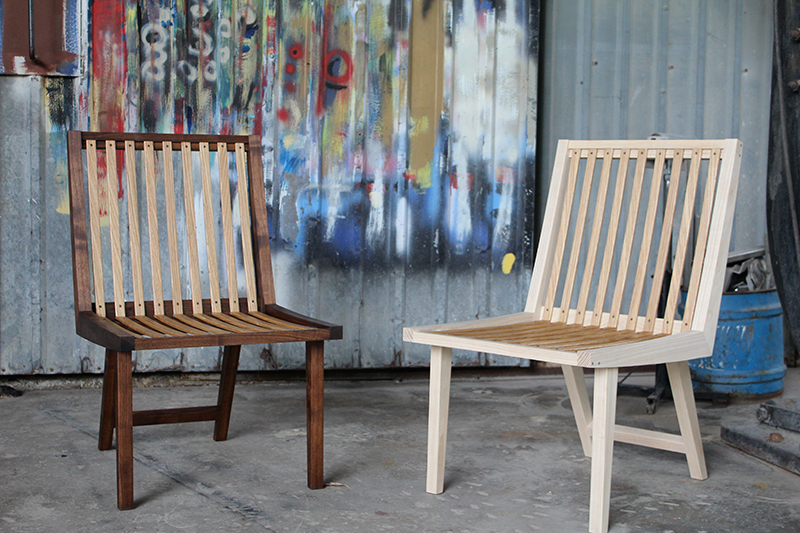
    I’ve always wanted to design and make my own chairs, but have never had the opportunity to do so, so I used the East Austin Studio Tour as a reason to design and make my first chair. Chairs are furniture that is the demands the most from craftsmen. First, it has to be strong enough to withstand all the weight and wracking force of the sitter. Then, it has to comfortable enough for the sitter to sit in for a long time. Then, it has to serve the function of that specific chair. A dining chair should be light and upright so it’s easy to move around and eat from. A lounge chair should be a little lower with more angle so it invites relaxation, but it shouldn’t be hard to get out of. And then finally, it has to look great. Not just from the front and sides, but from all angles.

    [singlepic id=189 w= h= float=center]

    For this chair, I went for unorthodox or different joinery methods so I can experiment and play around. Why make anything speculatively if you don’t push the limits, right? My design focus was for the seat and back to be one unit, and that these curved boomerang shapes will be the focus of the form. I brought the front legs from the sides and attaches to the side with an angled half lap joint with pegs to make it extra sturdy. I also brought the back legs in from the side and created the joinery so that the back legs are visually and physically holding the seat up. The angle of the legs makes the chair joint harder to break but it also keeps the sitter from being able to tilt the whole chair back on just the back legs. The back legs are mortise and tenoned in to the seat with dowels for extra grabbing power.

    [singlepic id=186 w= h= float=center]

    For the seat and back rest supports, I decided to laminate oak into curved slats that mimic the chair sides. The lamination makes it so I can get away with thinner material and makes the chair look nice with or without the upholstery. But just in case one of them does fail, I installed the slats using a dowel that has been hammered to create a mushroom like metal rivets. The wood rivets makes for a nice visual as well as tactile experience. I think the slats also make the piece look Nakashima-esque, but I may just be flattering myself.

    [singlepic id=185 w= h= float=center]

    You can’t have a lounge chair without cushions, so I commissioned my quilting and sewing friend Shannon Harris, to design and create the cushions to that would go well with the chairs. She came up with a simple and modern upholstery design using hexagons that compliments the lounge chairs well. I think the unique design fits in with the unique design of the chair perfectly. There is also a feeling of masculine and feminine to the chairs and upholstery by the wood and colors chosen. Also, for the show I asked Shannon to design a quilt that we could drape over the back of the chairs to create another layer. I also think it brings a feeling of warmth and that the furniture is ‘lived in’. The quilt is beautiful! the hexagon pattern flows from one corner to the other with changing tones. It speaks to the modern aesthetic while bringing warmth- which a lot of modern designs are lacking in.

    [singlepic id=215 w= h= float=center]